Why do I teach gender-inclusive Spanish to my students?
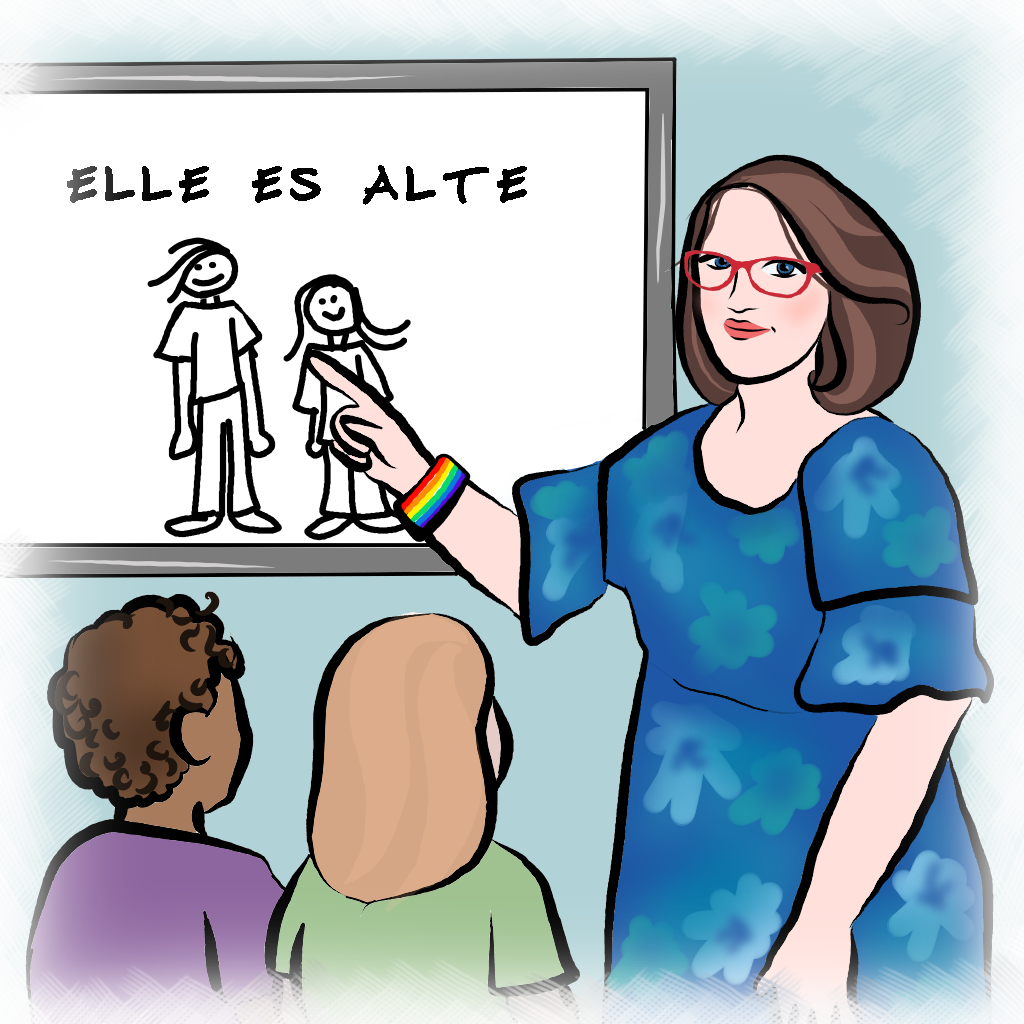
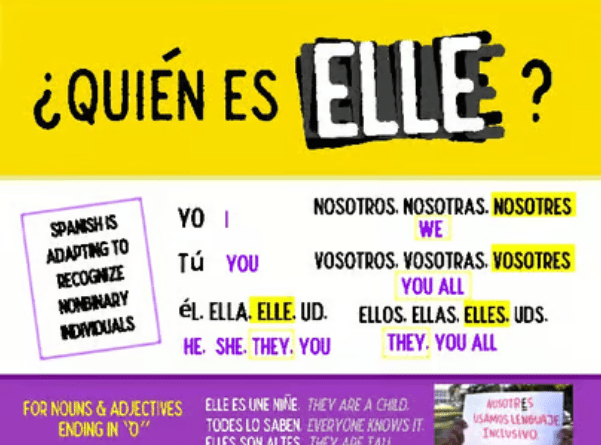
My students ask for it. Simply put, my non binary students and their friends don’t use “he/she” pronouns, so they don’t feel comfortable using “él/ella” either. They want to know more. They are actually interested in learning to communicate in Spanish and want to speak it authentically. (Spanish teacher’s dream, right?)
It exists. You can find communities and individuals using gender-inclusive Spanish throughout Spain and Latin America. Yes, it is most popular among queer folks, activists and allies – for now.
It helps people feel welcome, safe and equally valued. Gender nonconforming youth face disproportionate levels of discrimination and bullying, which has a profound effect on their well-being. For more about this, see The Human Rights Campaign and The Trevor Project
It provides a way to avoid prioritizing males, assuring everyone is equally seen and heard
It combats colonialism and honors native cultures in the Americas whose languages and cultures recognized other genders prior to the conquest and imposition of the Spanish language
My students love Theresa Jensen’s books and seek them out over and over again during free reading. I love that she teaches and creates teacher resources in direct gender-inclusive Spanish. This dedication to creating LGBTQ+ inclusive classrooms is so necessary.
Kodi Rain, Spanish teacher and author, Massachusetts











 Storytime con Sra. Jensen